
When it comes to LoJack vs FortiTrak, the real difference isn’t branding, it’s the technology underneath. For years, LoJack set the standard for stolen vehicle recovery using radio-frequency (RF) tracking.
It was a genuine leap forward in its era. But the way dealerships protect inventory has changed dramatically, and many lots that leaned on RF-based recovery for a decade or more are now rethinking whether reactive recovery is enough. This is a look at why, and what modern GPS-based protection changes for a dealership’s bottom line.
The Problem With Reactive Recovery
Older recovery systems like LoJack were designed around a single idea: help police find a car after it’s already been stolen. The transponder stays silent until a theft is reported, at which point law enforcement equipped with the right receiver can attempt to locate it. In its day, that was cutting-edge. The limitation is structural, though.
There’s no real-time visibility for the dealership, no alert the moment a vehicle moves, and recovery depends entirely on how quickly a theft is noticed, reported, and acted on by police with compatible equipment. For a lot holding dozens of high-value vehicles, “we’ll help you find it afterward” leaves a wide gap. Every hour a vehicle is gone is an hour it can be stripped, re-vinned, or driven across state lines.
That gap is the starting point for anyone comparing LoJack vs FortiTrak today.
The shift most dealerships describe is a mindset one: moving from “how fast can we recover a car after it’s stolen” to “how do we stop it from leaving the lot in the first place.” That’s the line that separates reactive recovery from proactive protection.
Enter: FortiTrak
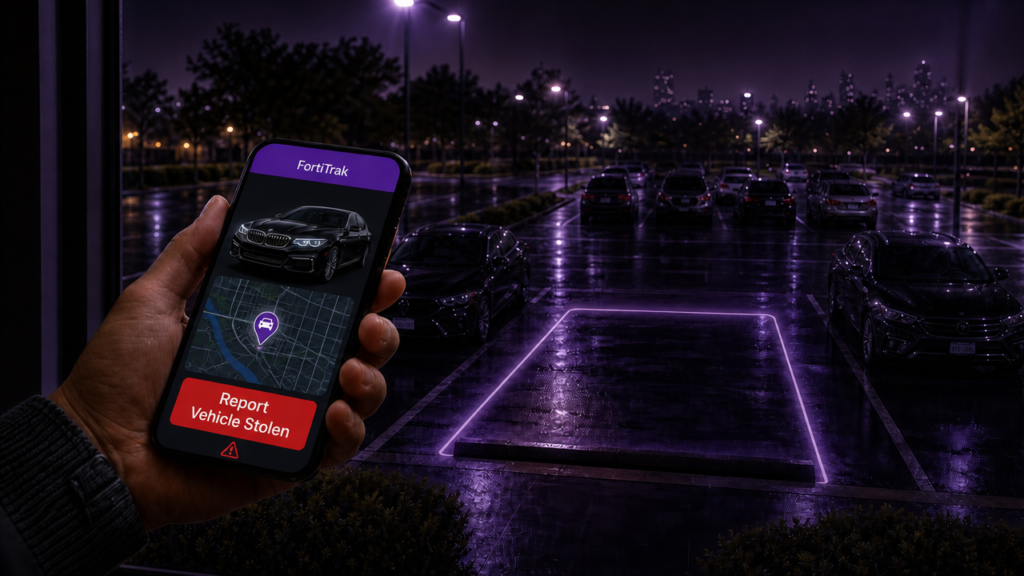
FortiTrak was built for the way theft actually happens today, fast, organized, and often overnight. Instead of a silent transponder waiting to be activated, FortiTrak gives dealerships live, always-on visibility through a single dashboard:
- 24/7 real-time GPS location on every vehicle
- Instant theft and movement alerts, day or night
- AI-based risk monitoring that flags suspicious activity early
- Geo-fencing to set boundaries per vehicle or per lot
- Secure law enforcement integration for fast, coordinated recovery
Installation takes under 30 minutes per vehicle, and unlike a one-time embedded transponder, the dealership stays in control of the data the entire time.
LoJack vs FortiTrak: The Core Difference
The simplest way to understand the two is by what happens the moment a vehicle moves when it shouldn’t. With a traditional RF recovery system, nothing happens until someone notices the car is gone and reports it.
With FortiTrak, an alert fires in real time, the dealership sees the vehicle’s live location instantly, and recovery can begin within minutes instead of hours or days. One is a safety net that catches you after the fall.
The other is a guardrail that keeps you from falling in the first place. For a dealership weighing cost per vehicle against risk per vehicle, that difference compounds fast across an entire lot.
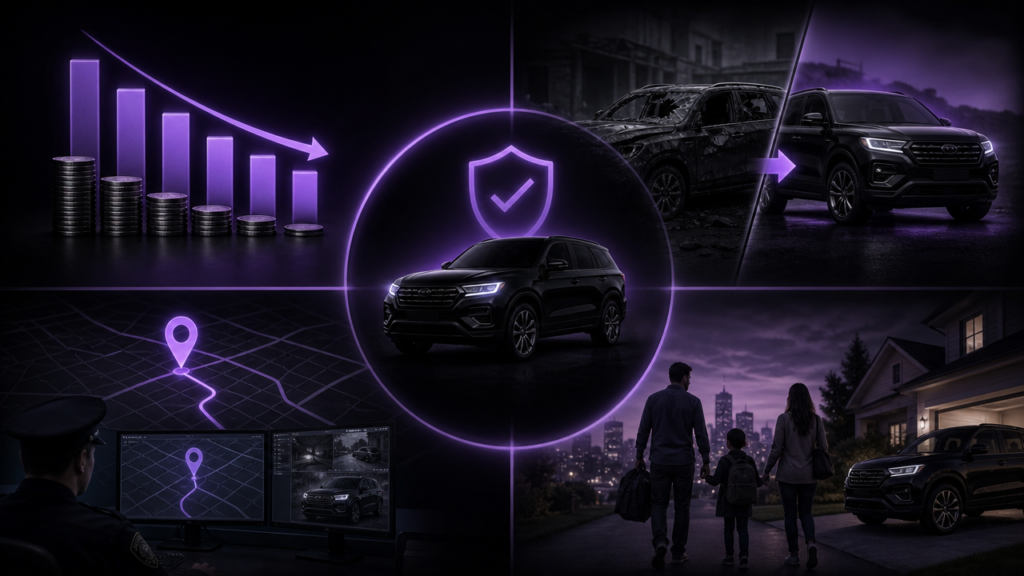
The ROI: More Than Just a Recovery
This single incident avoided:
- $35,000+ vehicle cost
- $2,500 insurance deductible
- $5,000 in lost sale revenue
- Hours of staff follow-up and stress
The dealership’s insurance premium was reduced by 12% the following month — thanks to proof of active tracking.